Founder's Perspectives

Founder's Perspectives
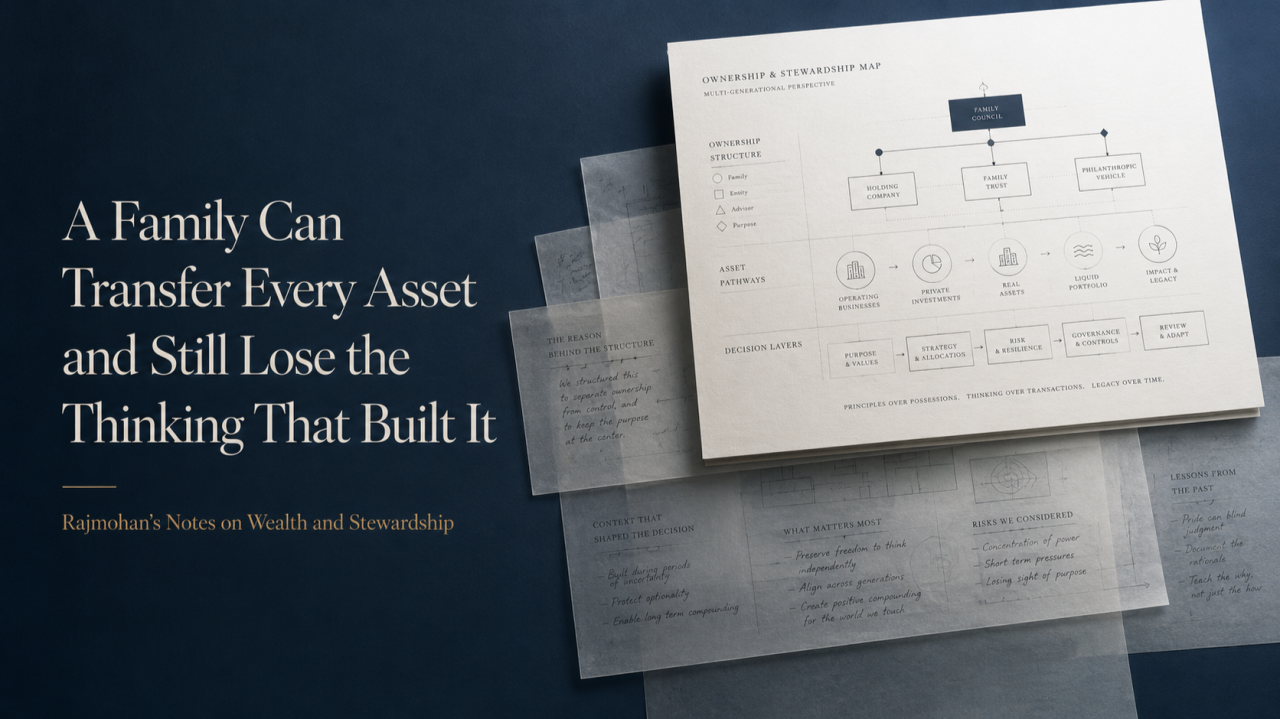
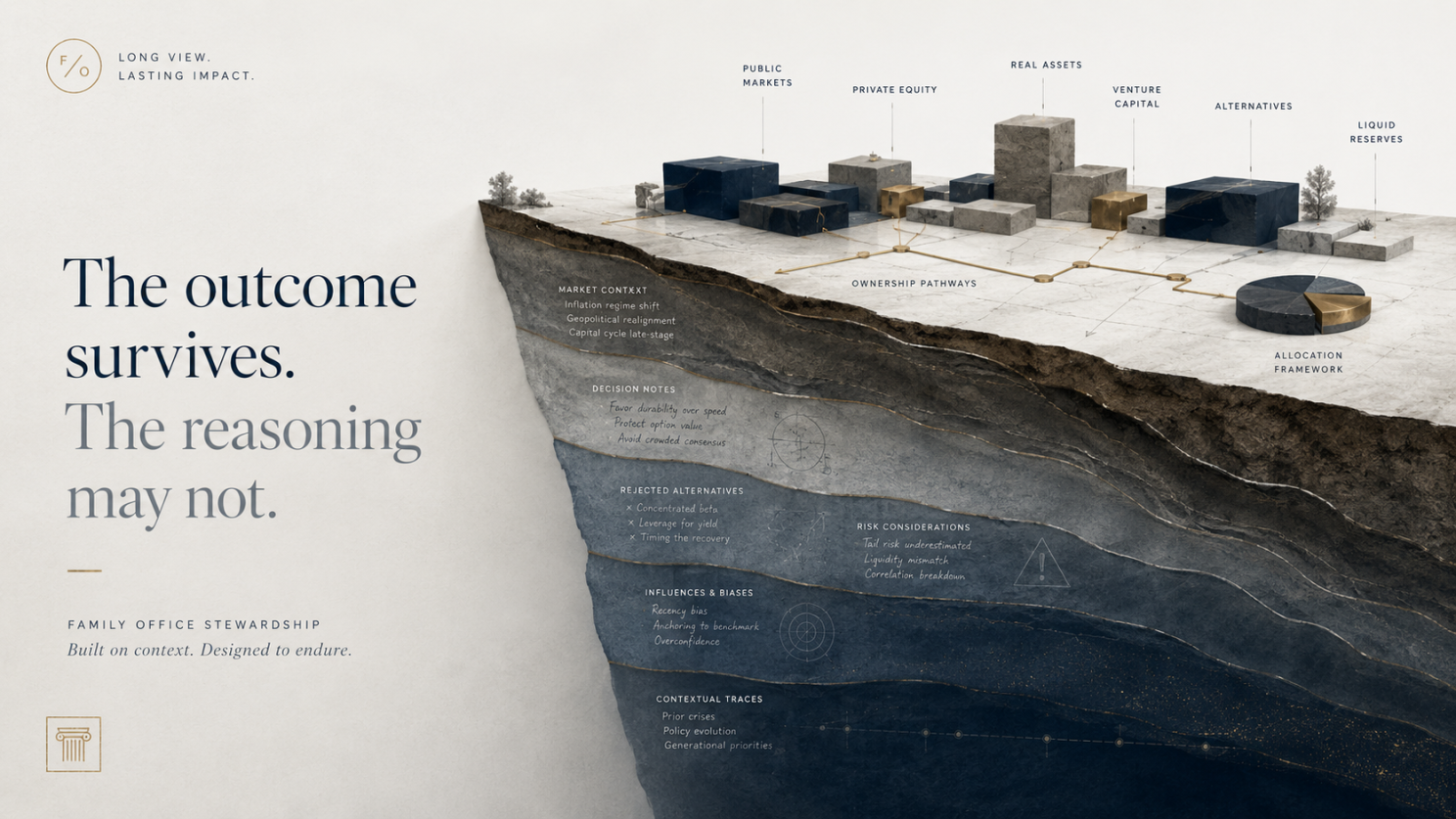
Most succession work records ownership, structures, and outcomes. It rarely records the reasoning behind decades of decisions: why a family stayed concentrated in one business when diversification sat within easy reach, why certain risks were avoided even when they looked attractive, why debt was used cautiously, why a partnership was preserved long after its returns stopped justifying it, why capital went year after year to a cause with no obvious link to the family’s commercial life. An heir can receive the entire portfolio and still miss the thinking that shaped it. A portfolio is only the residue of a mind. It cannot speak for the person who built it.
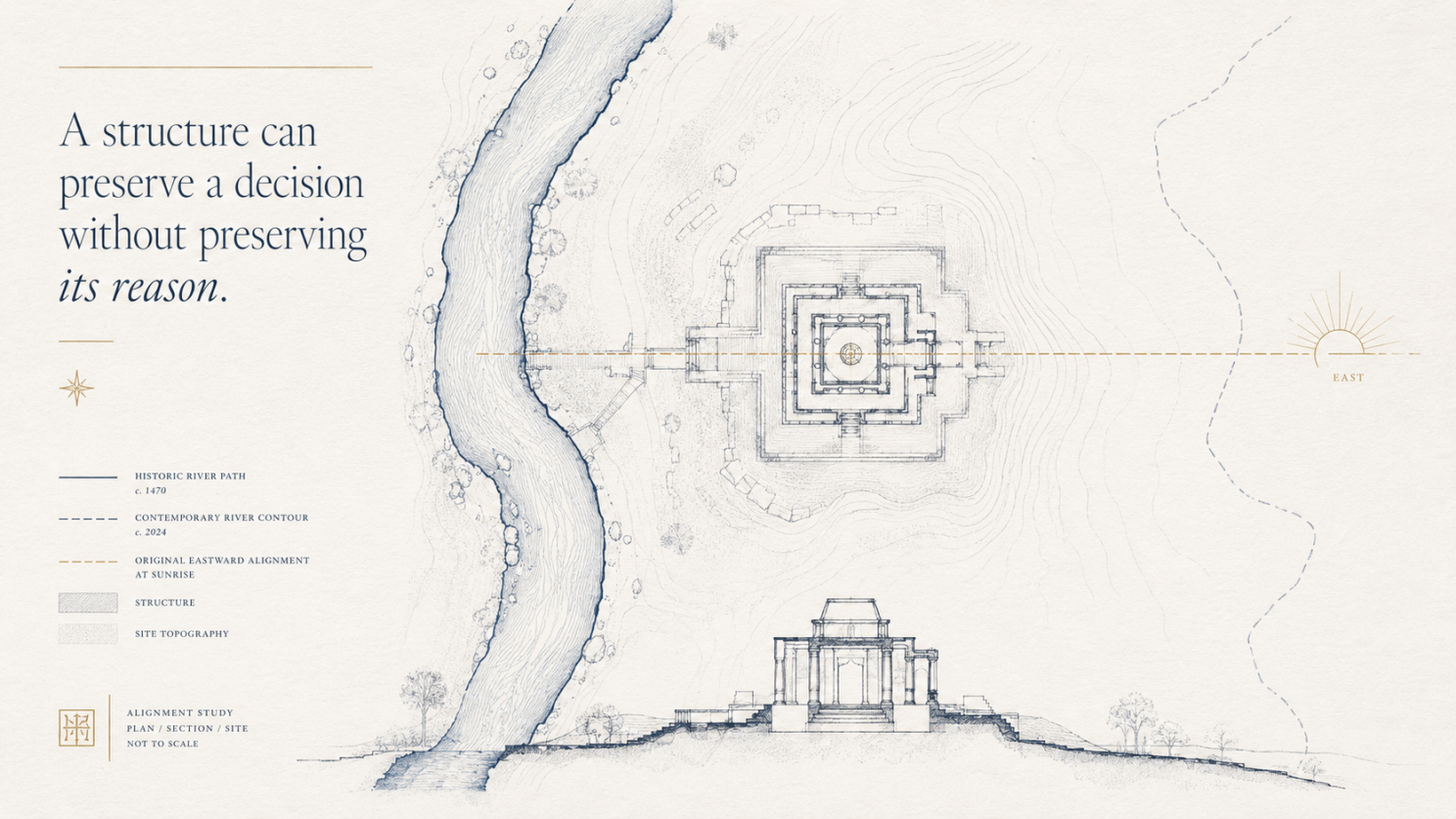
I think of it sometimes as a temple raised by a grandfather. The grandson walks in, folds his hands, and assumes the sanctum faces east because temples are supposed to face east. He has no way of knowing that this one faces east because his grandfather stood at that exact spot one morning, decades ago, and watched the sun rise over a river that has since changed course. The building holds a memory its own walls cannot speak. Unless the heir sat in the room where the decision was actually made, there is no reconstructing the reasoning simply by studying what the decision left behind.
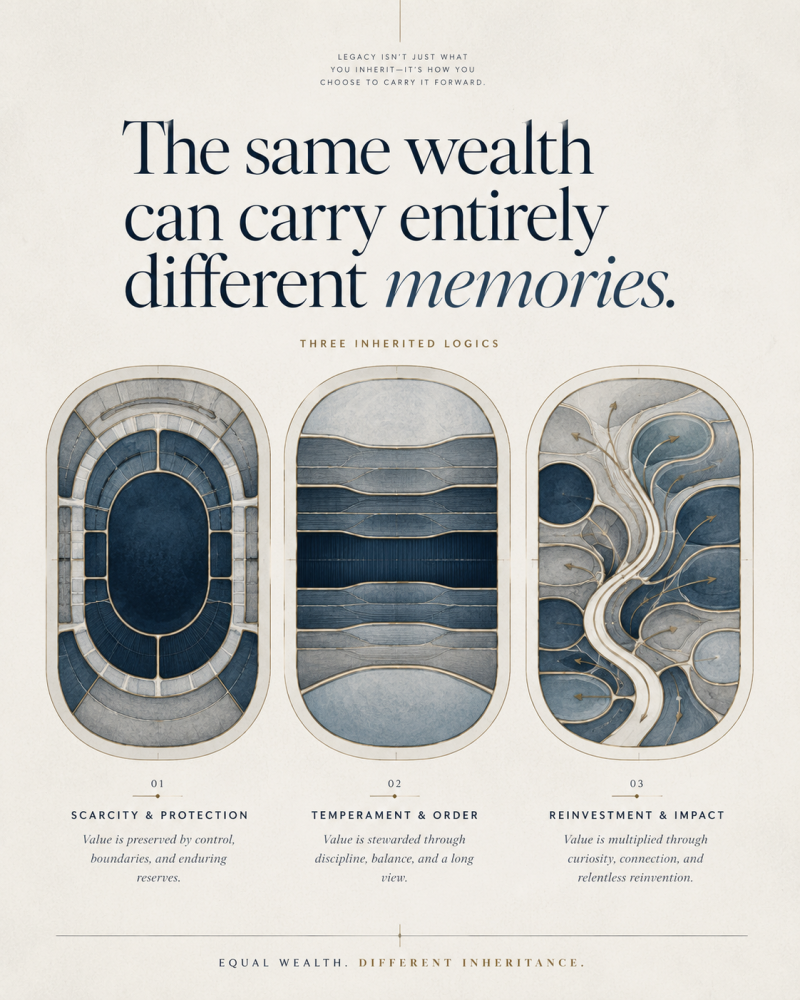
This gap exists because every founder carries a curriculum nobody enrolled him in and nobody examined him on. A founder who built from genuine scarcity holds cash the way a man who once went hungry holds food, never quite trusting there will be a next meal even after forty years of next meals arriving on schedule. A founder whose father served government all his life inherits a temperament along with whatever savings came down to him, a quiet unease about risk that outlasts even the son’s own far larger fortune. A founder whose father ran a small business of his own distrusts anything sitting idle, because that father never separated saving from reinvesting, and the son wants his own capital visibly at work. Three founders can share an identical net worth and still arrive at three entirely different portfolios, each of them certain his is the only sensible way to hold money, and each of them right, given where he began. None of this lives on paper. It sits in a man the way water sits in soil, present but invisible until someone goes looking for it.
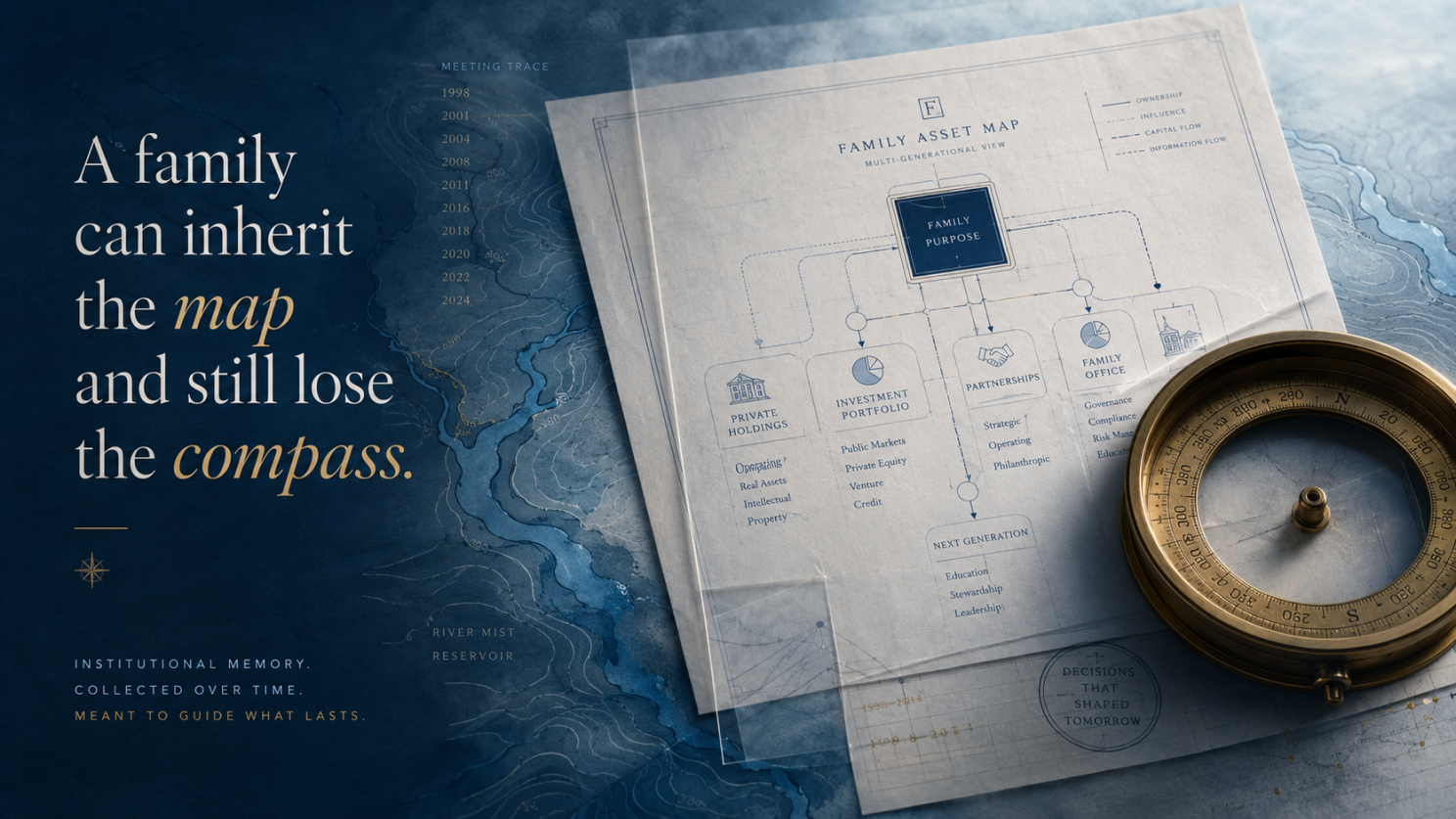
I once worked with a family where the founder had built almost his entire portfolio around unlisted equity and joint venture partnerships he had personally negotiated over decades, while running the surplus from those ventures with almost stubborn caution, every dividend parked into the safest instrument available to him. Nobody in his family, his spouse included, could have told you why he ran things this way. When he passed on, the family had a portfolio and no compass. Underneath the technical questions they brought us sat an older one: what would he have done. We had sat across the table with him for enough years to hold some real sense of it, and in that moment the family office was something closer to a reservoir than an advisor, the place where his thinking had been quietly collected, meeting by meeting, long before anyone knew it would one day need to be poured back out for the people who came after him.
“
“None of this lives on paper. It sits in a man the way water
sits in soil, present but invisible until someone goes looking for it.”
Families often confuse two obligations that are not the same thing: honouring a decision, and obeying it without question. While a founder is alive and at the helm, his instructions deserve to be followed. He holds something no analysis can replace: the lived memory of what that decision actually cost him to make. Every decision still carries the conditions of its own time built into it, though, and what was wise years ago was wise because of what surrounded it then. A decision that has never been tested against new evidence has usually stopped being wisdom, whether the family notices or not. Once a founder is no longer at the helm, or no longer here at all, a family’s deference tends to continue, but its meaning quietly shifts. It stops being respect for a living man’s judgement, tested against real conditions, and turns into protection of an artefact, guarded precisely because nobody wants to be the one who touches it first.
What is worth protecting is the value sitting underneath the decision: the primacy of relationship over yield, the instinct toward caution born of real scarcity, the quiet duty to a cause the family has carried for years. The instrument that once carried that value does not need to stay frozen for the value itself to survive it.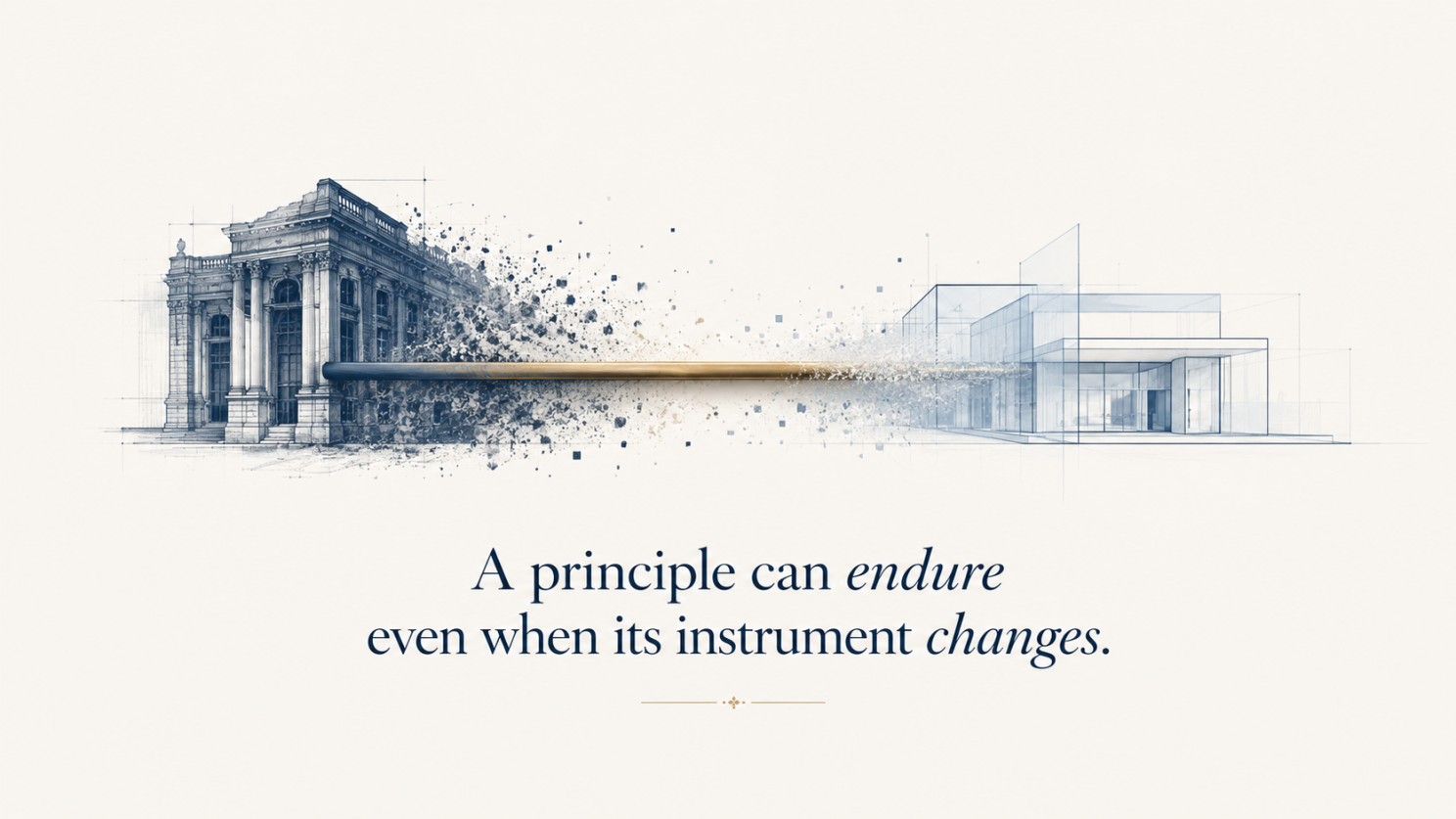
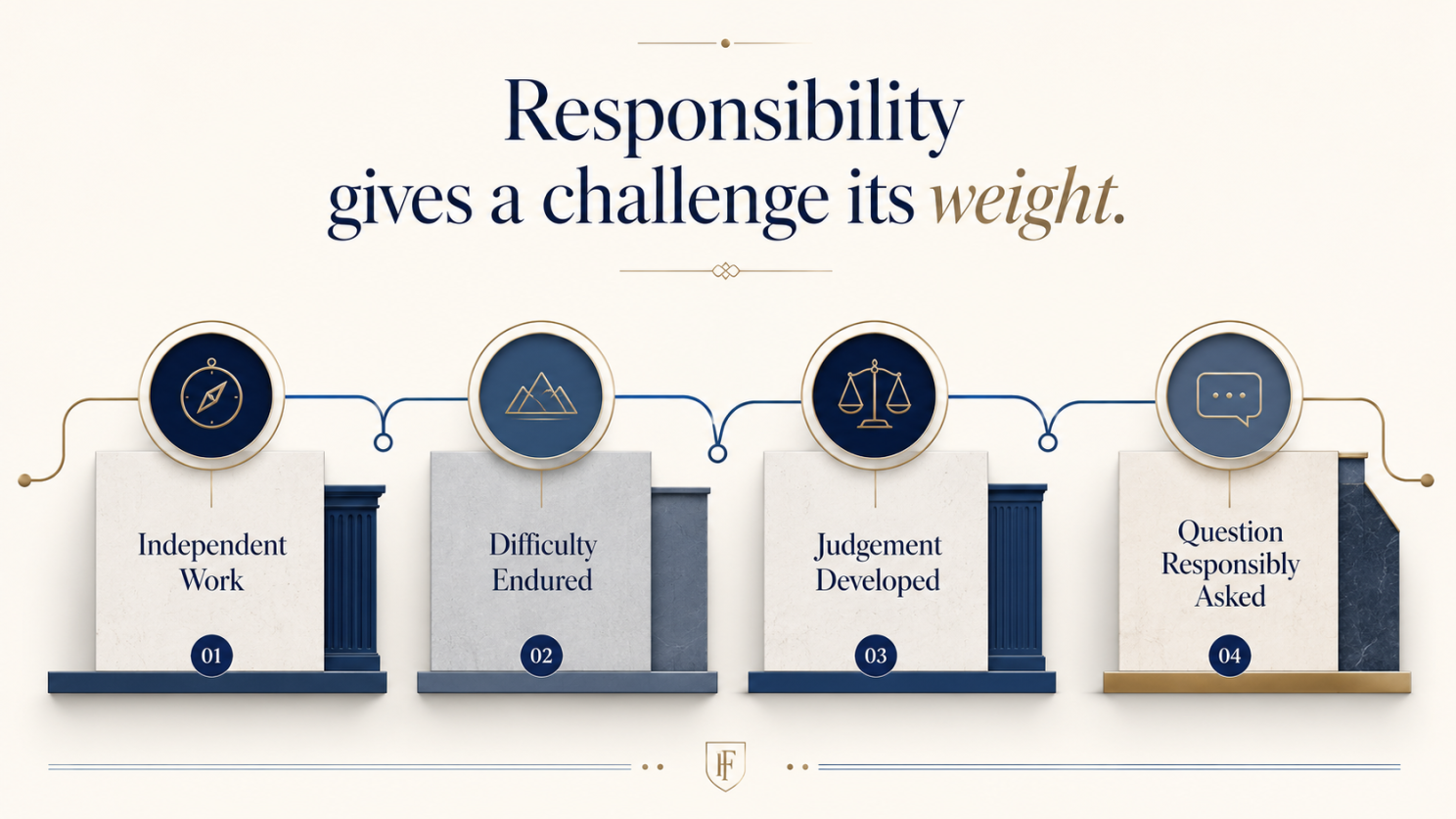
Deciding where honouring ends and obeying begins is its own question, and birth order is not the answer to it. An heir can challenge a great deal, but rarely before he has built the standing from which a challenge carries any weight, and that standing does not arrive alongside the corpus. It gets earned separately, through some competence that owes the family name nothing. The heir who has kept his own venture alive through one genuinely difficult year has earned it. The heir whose only qualification is patience has not, whatever his instincts eventually turn out to be worth. Once that standing exists, a family should expect the question rather than flinch at it: is this decision still relevant to the world it now sits inside, has loyalty to one relationship quietly hardened into a concentration nobody wants to name, is this being kept only because reversing it would feel like an insult to someone no longer here to mind. In my experience, the heirs who have genuinely earned this standing ask these questions the most carefully, and usually in private, long before they ask them at the family table.
“
“The instruments and the accounts are only half of what gets handed down. The reasoning has to be given on purpose, in words, or it is never given at all.”
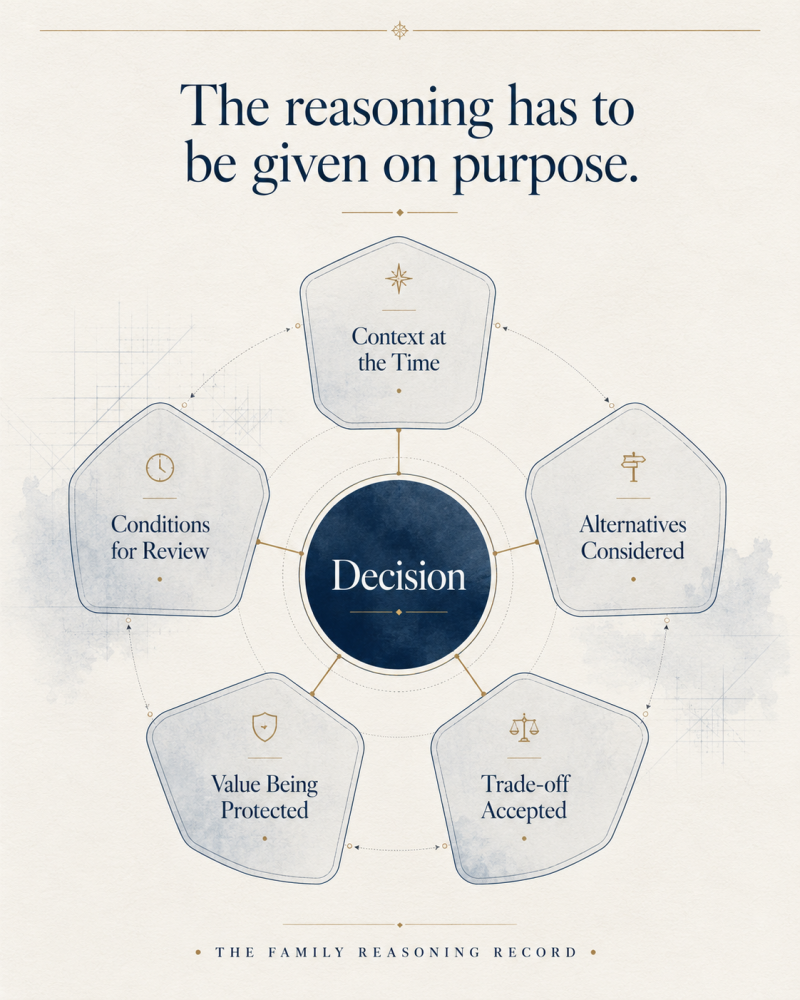
I keep returning to something from another part of my life. The Acharyas never asked that an observance be repeated identically regardless of circumstance. What they asked was that the intention behind it be preserved, even as its outer form was allowed to adjust to the age it found itself in. That may be the real inheritance a family owes the generation after it: an honest account, offered while there is still time to offer it, of why the wealth was built the way it was, alongside the wealth itself. The instruments and the accounts are only half of what gets handed down. The reasoning has to be given on purpose, in words, or it is never given at all.
Every decision begins with a belief. We invest because we believe in an opportunity. We build businesses because we believe something can be done better. We prepare the next generation because we believe a legacy can evolve and endure. Those beliefs influence what we do. Our actions then change the circumstances in which we and […]
For a child who cannot hear, the challenge can extend far beyond hearing itself. It can affect how a child communicates, learns, participates in school and connects with the people around them. When support comes late, these challenges can shape a child’s opportunities well into adulthood. But early identification, the right support and an involved […]
The RBI’s 25 bps hike to 5.50% and its move from “neutral” to “calibrated tightening” came as a supply shock from West Asia pushed major central banks in the same direction. Within about a week in September, the ECB, the Fed and the Bank of Japan all raised rates while the Bank of England held […]
signup for updates