Founder's Perspectives

Founder's Perspectives
Somewhere in the United States this month, a wealth manager who has held a family’s account for over a decade is watching a thirty-something heir open the portfolio on her own phone, for the first time, without calling first to ask how.
By 2048, more than sixty trillion dollars is expected to move from one generation to the next in the United States alone, according to estimates from Cerulli Associates reported this week by the Financial Times. It is being called the great wealth transfer, and most of what has been written about it treats the number as the story: how large it is, how fast it is arriving, how unprepared parts of the industry may be for it.
The number is not really the story. The story is what moves when wealth moves, and what does not.

A family can spend years preparing a transfer that works perfectly on paper. Trusts are drafted with care. Structures are reviewed twice. Tax positions are settled long before anyone urgently needs them. On the page, everything is in order.
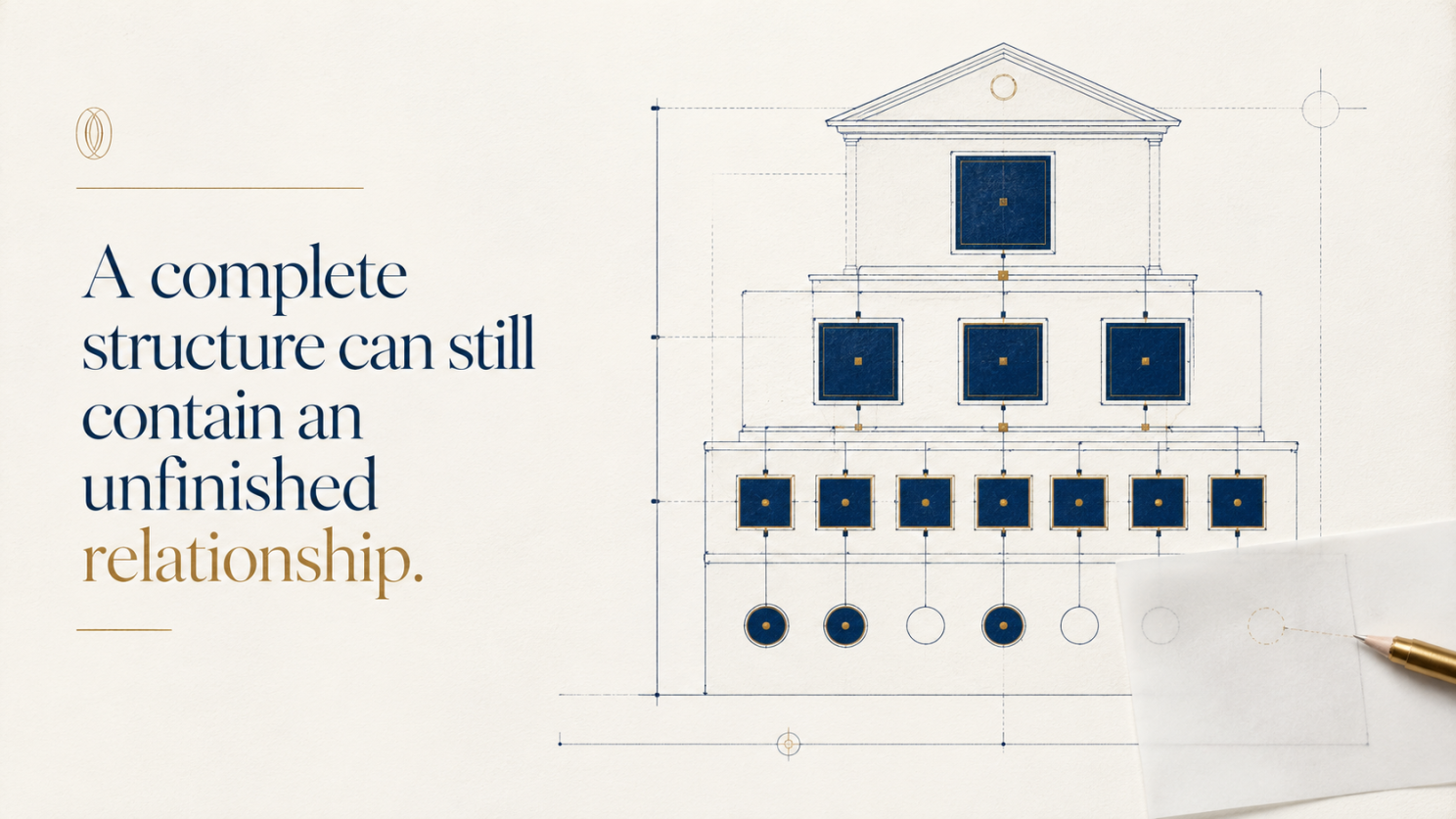
But a portfolio is not only a set of assets. It is also a relationship, built over years, sometimes decades, between a family and the people who manage its money. Assets move through a signature. Relationships do not. No document can hand a family’s confidence in an advisor to someone who has never met that advisor.
This is closer to what most of the coverage keeps circling without naming directly. Younger heirs are not rejecting their family’s wealth, or the discipline that built it. They are questioning the arrangements that grew up around it: a single advisor relationship kept out of habit rather than fit, a quarterly call that explains very little, a portfolio they are expected to trust without ever being shown how its decisions are actually made.
That is not recklessness. It is a reasonable response to being kept at a distance. A generation raised on direct access, real-time information, and the ability to ask questions of almost anything, is unlikely to accept a relationship where their only visibility, growing up, was a name at the bottom of a letter. What they are asking for is not less oversight. It is more visibility into how that oversight actually works, and some say in who provides it.
“
The wealth transfer is the headline. The trust transfer is the actual event.
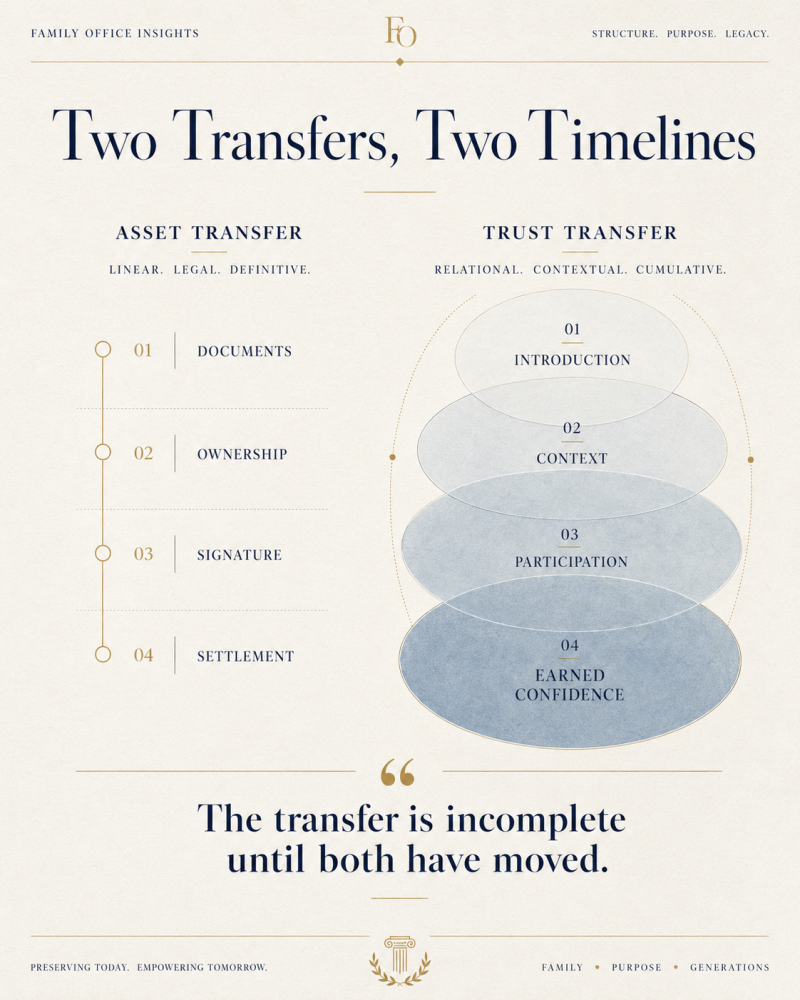
Trust, unlike an asset, cannot be inherited. It has to be earned again, by whoever happens to be in the room once the generation that built the wealth is no longer the one asking the questions.
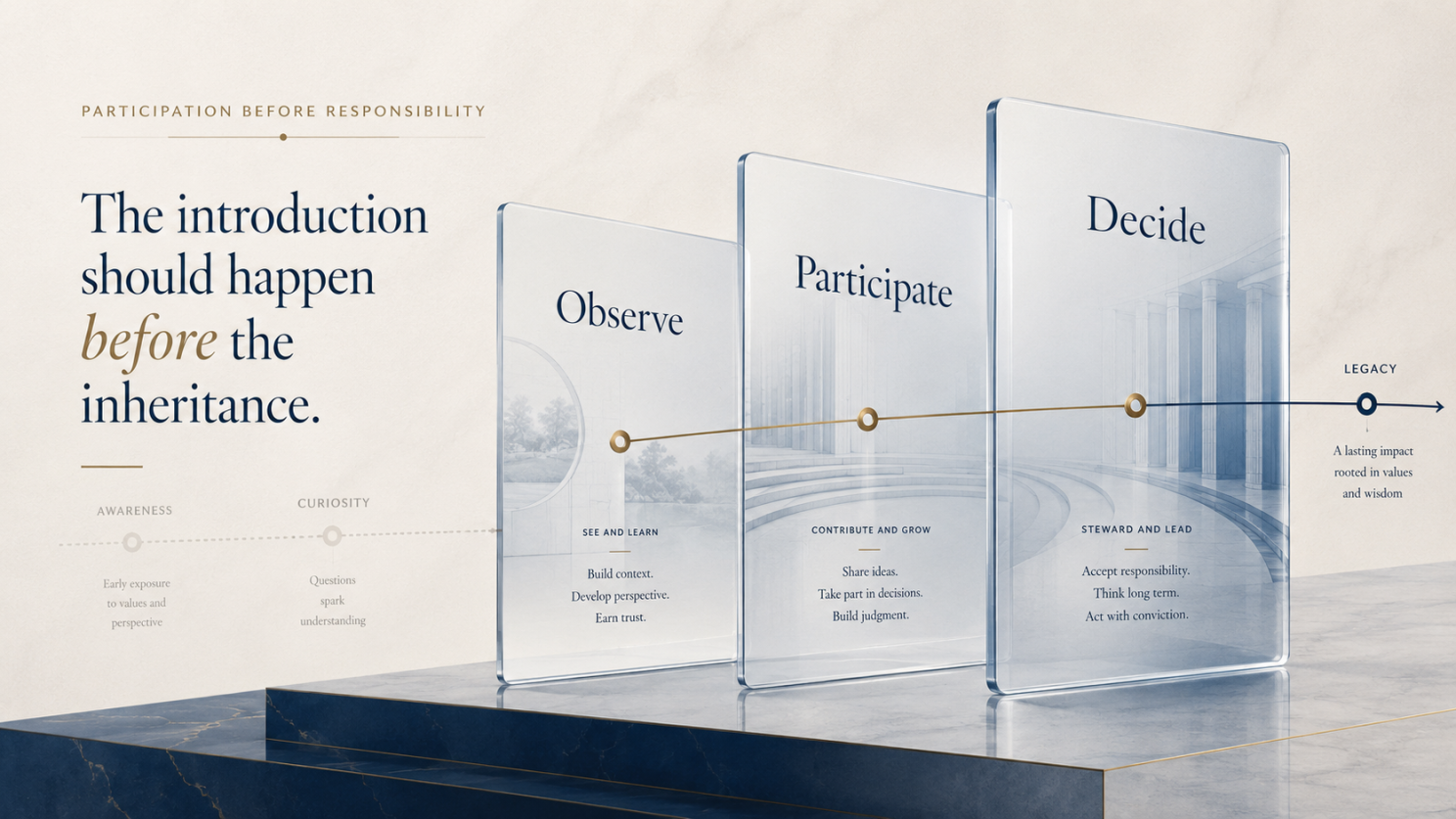
This is where family governance quietly matters more than portfolio construction. The families who move through this transition without losing either their wealth or their working relationships are rarely the ones with the cleverest structures. They are the ones who brought the next generation into the room years before the transfer became urgent: into the reviews, the decisions, the disagreements, not only the eventual signatures.
At Entrust, this is one of the quieter convictions we return to often: that a family office should never be built around one advisor’s memory of a family, however long or well-intentioned that memory is. Continuity has to sit in structure and shared understanding, not in a single relationship that retires, moves on, or is simply never introduced to whoever comes next.
Wealth managers reading this correctly will invest in better digital access and lower-cost platforms that match what younger clients now expect. That is necessary. It is not sufficient. A cleaner app does not, on its own, rebuild a relationship that was never built with the incoming generation in the first place. Technology can carry information faster. It cannot carry history, judgement, or the years of small decisions that make a family trust an advisor with the large ones.
Research from the CFA Institute this year adds a useful correction to the technology narrative. Even as younger investors lean heavily on digital tools, human advisors remain the single most trusted source of investment guidance among them. This is not simply a story of humans losing to platforms. It is a story of which humans, structured in which way, earn enough trust to stay in the room.
The data in this particular report is American. The pattern is not. Family offices across India, the Gulf and Southeast Asia are watching similar transitions inside their own families, often without a Cerulli-sized number attached to make the moment legible. The size of the number should not be mistaken for the size of the lesson.
None of this makes the transfer simpler. Sixty trillion dollars will not move cleanly, and neither will the relationships built around it. Some families will lose advisors who deserved to stay. Some advisors will lose families they served well, not because the work was poor, but because no one thought to introduce them to whoever was arriving next.
𝗔𝘀𝘀𝗲𝘁𝘀 𝗰𝗮𝗻 𝗯𝗲 𝘀𝗶𝗴𝗻𝗲𝗱 𝗼𝘃𝗲𝗿. 𝗧𝗿𝘂𝘀𝘁 𝗵𝗮𝘀 𝘁𝗼 𝗯𝗲 𝗺𝗲𝘁, 𝗶𝗻 𝗽𝗲𝗿𝘀𝗼𝗻, 𝘄𝗲𝗹𝗹 𝗯𝗲𝗳𝗼𝗿𝗲 𝗶𝘁 𝗶𝘀 𝗻𝗲𝗲𝗱𝗲𝗱.
The question worth sitting with is not whether your family’s wealth will transfer well. Most well-structured wealth eventually does. It is whether the people managing it, and the people about to inherit responsibility for it, have actually met.
Every decision begins with a belief. We invest because we believe in an opportunity. We build businesses because we believe something can be done better. We prepare the next generation because we believe a legacy can evolve and endure. Those beliefs influence what we do. Our actions then change the circumstances in which we and […]
For a child who cannot hear, the challenge can extend far beyond hearing itself. It can affect how a child communicates, learns, participates in school and connects with the people around them. When support comes late, these challenges can shape a child’s opportunities well into adulthood. But early identification, the right support and an involved […]
The RBI’s 25 bps hike to 5.50% and its move from “neutral” to “calibrated tightening” came as a supply shock from West Asia pushed major central banks in the same direction. Within about a week in September, the ECB, the Fed and the Bank of Japan all raised rates while the Bank of England held […]
signup for updates