Estate & Succession Planning
Estate & Succession Planning
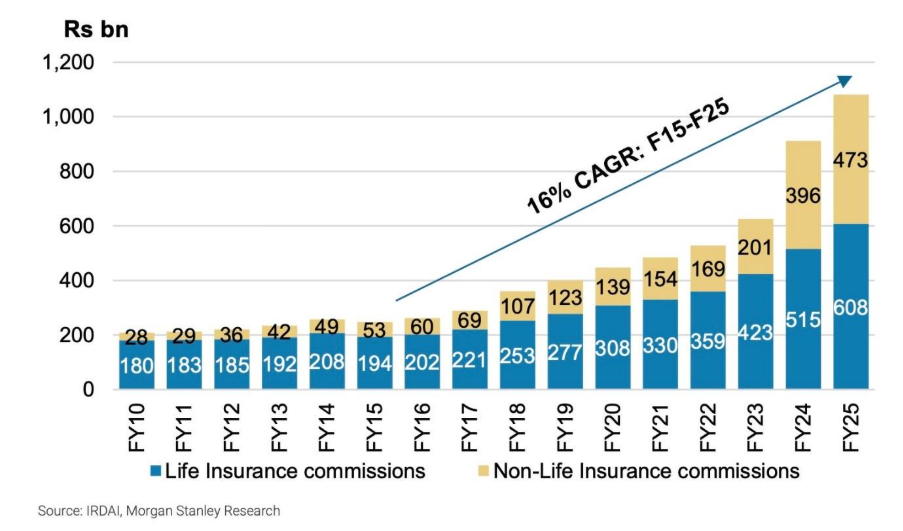
Recent regulatory developments around insurance commission structures reflect an important shift in the industry toward greater transparency and responsible distribution.
While such reforms are welcome, they address only one part of a broader challenge: ensuring that insurance solutions truly align with the long-term needs of families.
The real issue is not just how insurance is sold, but how insurance fits into a family’s overall financial life. For business families, financial decisions are rarely isolated. Their personal wealth is often closely tied to their businesses, and many other factors come into play: succession planning, liquidity needs, family governance, and the responsibility of passing wealth to the next generation. Because of this, insurance should not begin with a product recommendation. A more thoughtful approach begins with understanding risks.
For example:
When these questions are discussed first, the role of insurance becomes much clearer. This is where the role of a trusted advisor or family office intermediary becomes important. Instead of focusing on selling a policy, a trusted advisor first looks at the family’s overall financial structure and long-term goals. Existing insurance plans are reviewed, gaps are identified, and solutions are designed to support the family’s broader wealth strategy.
In this context, insurance becomes more than a product. It becomes a strategic layer of protection: helping safeguard businesses, preserve family wealth, and ensure that transitions across generations happen smoothly. Often, the most effective insurance strategies are not the most visible ones. They are simply the ones that were carefully planned well in advance, long before they were ever needed.
Perhaps the real value lies in having the right conversation early, one that focuses not on products, but on protecting what families have built and ensuring it endures across generations.
Markets are not driven by growth alone. They are not driven by inflation alone. It is the interaction between the two that shapes the investment environment. A useful way to think about global markets is through 2 simple questions: Is economic growth rising or falling? Is inflation rising or falling? Put these two forces together, […]
There is an old observation about family businesses that remains relevant across generations: The first generation builds the wealth, the second manages it, and the third often struggles to preserve it. Different cultures have their own versions of this idea. In the West, there is the familiar phrase “shirtsleeves to shirtsleeves in three generations.” In […]
For a child battling cancer, the illness is only one part of the challenge. Long hospital stays, demanding treatment schedules and months away from school can disrupt education, friendships and the simple joys of childhood. While medical teams focus on treating the disease, there is another question that deserves attention: how do we help a […]
signup for updates